I. The Low-Altitude Economy Takes Off—Where Are the Material Bottlenecks?
In 2026, China's low-altitude economy is growing at over 25% annually, with eVTOL (electric vertical take-off and landing) aircraft transitioning from concept validation to pre-commercial mass production. A typical passenger eVTOL must keep its empty weight within 800–1,200kg while carrying 6–8 passengers and a 200kWh-class battery pack, making every gram of weight critical.
Traditional aircraft structural connections rely on riveting and bolting. A small eVTOL airframe may contain thousands of rivets, and while each rivet and its reinforcement washer seems insignificant, together they account for 8–12% of total structural weight. More critically, rivet holes sever the fiber continuity of carbon-fiber composite materials, creating stress concentration points that become sources of fatigue cracks under the repeated vibration of vertical take-off and landing.
Replacing rivets with structural adhesives and traditional greases with specialty lubricants is the inevitable path to eVTOL lightweighting and long service life.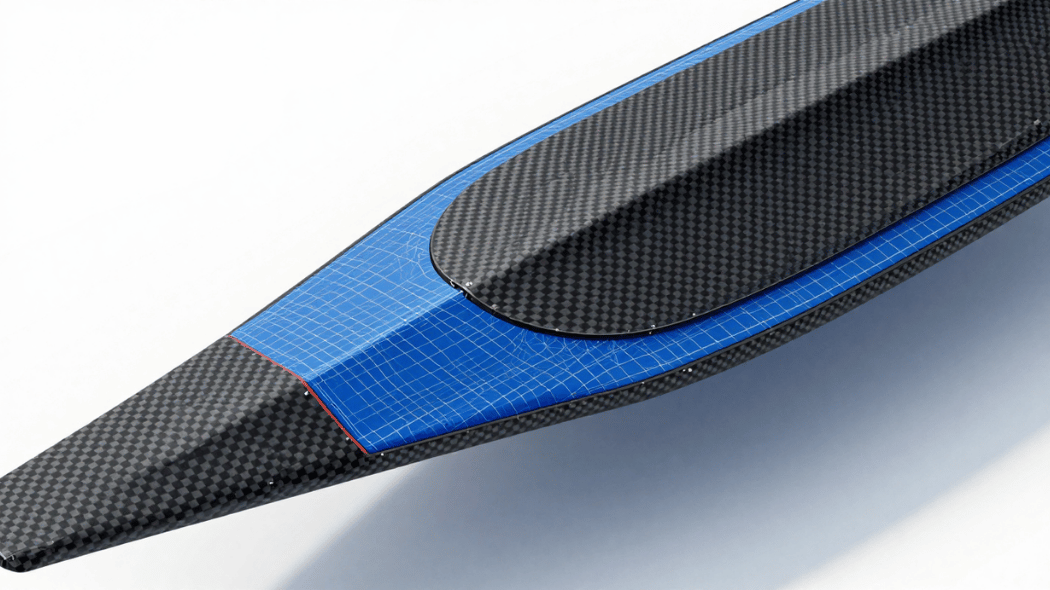
II. Structural Bonding: Reducing Airframe Weight by 15–30%
2.1 Bonding of Carbon-Fiber Composite Primary Load-Bearing Structures
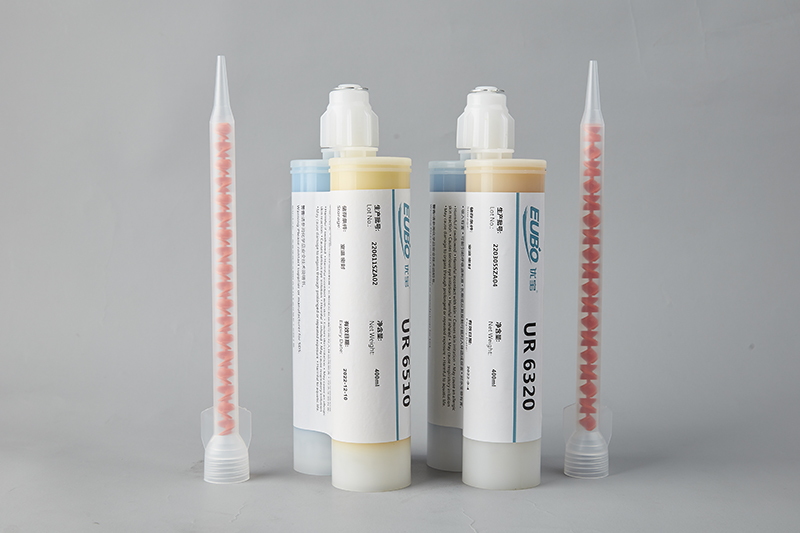
eVTOL wings and fuselage skins extensively use carbon-fiber prepregs (CFRP), whose specific strength and modulus are 3–5 times that of aluminum alloys. However, carbon-fiber surfaces are smooth and chemically inert, making effective adhesion difficult for conventional glues. EUBO's two-component epoxy structural adhesive addresses this challenge through the following technical approach:
-
Surface treatment synergy: After plasma or sandpaper roughening of the carbon-fiber bonding surface, application of a dedicated primer raises surface energy from 40mN/m to over 60mN/m, providing an anchor foundation for the adhesive
-
Toughened epoxy system: Flexible polyether segments are introduced into the rigid epoxy backbone, achieving post-cure shear strength ≥25MPa and elongation at break ≥5%, withstanding both aerodynamic loads and landing impact absorption
-
Humidity-heat aging resistance: After 1,000 hours at 85℃/85%RH, shear strength retention ≥80%, meeting eVTOL operational requirements at tropical coastal airports
In bonding tests on a certain eVTOL wing spar cap, replacing rivets with EUBO structural adhesive reduced connection weight by 42% per joint, while fatigue life increased from 100,000 cycles for riveting to over 500,000 cycles.

2.2 Bonding of PEEK to Metal Dissimilar Materials
eVTOL motor mounts and battery frames often combine PEEK (polyetheretherketone) engineering plastics with aluminum alloys. PEEK has extremely low surface energy (~30mN/m) and chemical corrosion resistance, making adhesion nearly impossible for ordinary glues.
EUBO's acrylic structural adhesive achieves molecular-level mechanical interlocking on PEEK surfaces through micro-swelling effects created by specially designed monomers. Post-cure peel strength ≥6N/mm, temperature range -55℃~120℃, meeting the thermal cycling demands of motor compartment heat dissipation and high-altitude cold exposure.
2.3 Sealing and Bonding of Glass Canopy to PBT Frame
Between the eVTOL canopy glass (polycarbonate or aviation-grade glass) and PBT plastic frame, structural fixation, airtight sealing, and bird-strike buffering must be simultaneously satisfied. EUBO's
PUR hot melt adhesive achieves complete gap filling in 0.3mm glue seams, with post-cure Shore A hardness of 75, providing structural support while absorbing impact energy through elastic deformation during bird strikes to prevent glass shattering.

III. Specialty Lubrication: Wide Temperature Range, Long Life, Low Drag
3.1 Wide-Temperature Bearing Grease for Rotor Hub Bearings
eVTOL rotor hub bearings endure complex centrifugal loads and flapping vibration during flight, with operating temperatures ranging from -40℃ on the ground (northern winter) to 120℃ near the motor compartment (full-power climb). Traditional aviation greases solidify at low temperatures, causing starting torque to spike, while softening and bleeding at high temperatures.
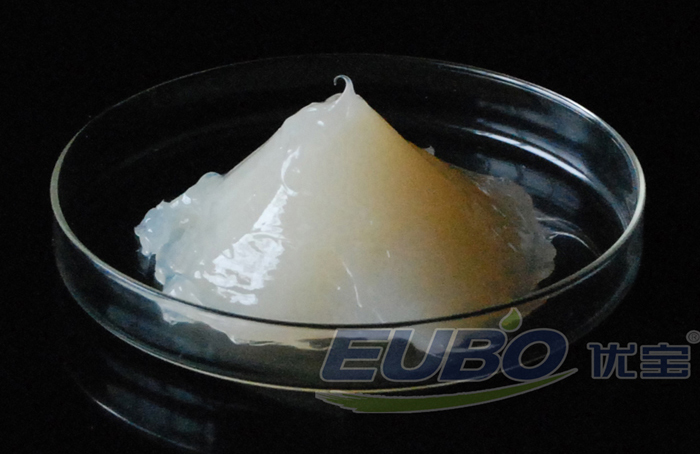
EUBO's aviation-grade wide-temperature grease uses synthetic ester base oil, complex lithium soap thickener, and nano-ceramic solid lubricant additives:
-
Operating range -65℃~200℃, with starting torque at -40℃ only 1/3 that of conventional greases
-
10,000rpm high-speed bearing life exceeding 5,000 hours, meeting eVTOL 20,000-flight-hour maintenance intervals
-
Low evaporation loss (150℃/22h < 2%), preventing grease volatilization from contaminating the cabin and motor windings
3.2 Dry-Film Lubrication for Landing Gear Folding Mechanisms
eVTOL landing gear must fold away during flight to reduce aerodynamic drag. Folding hinges remain stationary for extended periods, during which traditional greases oxidize and coke, causing jamming during next deployment. EUBO's dry-film lubricant forms a 0.5–2μm PTFE solid lubricant film on hinge surfaces:
-
Dry, oil-free finish that does not attract dust or sand particles, suitable for unimproved landing sites
-
Friction coefficient 0.03–0.08, providing consistent deployment torque regardless of temperature
-
Film life exceeding 1,000 folding cycles, with maintenance-free intervals synchronized with airframe overhaul schedules
3.3 Noise-Reducing Lubrication for Flight-Control Servo Gears
eVTOL flight-control servos operate at response frequencies above 100Hz, and gear meshing noise directly affects passenger comfort. EUBO's
damping grease maintains stable damping torque across -40℃~85℃ through precise viscosity-temperature characteristic control, eliminating the "clicking" noise during gear reversal while reducing gear wear rates by over 60%.
IV. Aviation-Grade Reliability: From Materials to Validation
As manned aircraft, eVTOL vehicles demand material certification standards far exceeding ordinary industrial products. EUBO's aviation-direction products have passed the following validation systems:
-
DO-160G Environmental Qualification Testing: Covering 26 aviation standards including temperature, humidity, salt spray, fungus, vibration, and shock
-
RTCA/DO-178C Software Correlation: Adhesive cure process parameters are bound to flight-control software versions, ensuring batch consistency
-
Flammability Requirements: Structural adhesive passes UL94 V-0 flammability testing; grease passes FAR 25.853 aviation interior flammability standards
-
Material Traceability: Full-chain QR-code traceability from raw material batches to finished goods shipment, meeting airworthiness certification requirements
V. Conclusion
The low-altitude economy is not simply "putting cars in the sky"—it is a comprehensive challenge to materials science. From lightweight bonding of carbon fiber, to dissimilar-material joining of PEEK, from -65℃ cold-start to 200℃ motor heat dissipation, every gram of weight saved and every drop of lubricant matters for flight safety and commercial viability.
Shenzhen EUBO New Materials Co., Ltd. drives innovation through both structural adhesives and specialty lubricants, providing eVTOL industry chains with comprehensive material solutions from airframe to propulsion, from ground to sky. As eVTOL transitions from prototypes to mass production in 2026, EUBO stands ready to collaborate with aircraft designers and component suppliers, using materials innovation to lift the low-altitude economy into the skies.
About Shenzhen EUBO New Materials Co., Ltd.
Shenzhen EUBO New Materials Technology Co., Ltd. (EUBO), founded in 2000, is a national high-tech enterprise and a national-level specialized and innovative "Little Giant" company specializing in the R&D, production, sales, and service of specialty lubricating greases and adhesives. The company operates a CNAS-accredited laboratory, a joint laboratory with Shenzhen Tsinghua University Research Institute, and a 30,000-square-meter intelligent manufacturing base in Yichun, Jiangxi. Its products are widely used in automotive, electronics, new energy, robotics, aerospace, and low-altitude economy sectors, and have passed international certifications including IATF 16949, ISO 9001, ISO 14001, and NSF.